Big Ideas,
Real Impact.
Driven by curiosity and built on purpose, this is where bold thinking meets thoughtful execution. Let’s create something meaningful together.
We help owners, occupiers, developers, architects and design teams understand how movement affects the performance, efficiency and value of buildings.
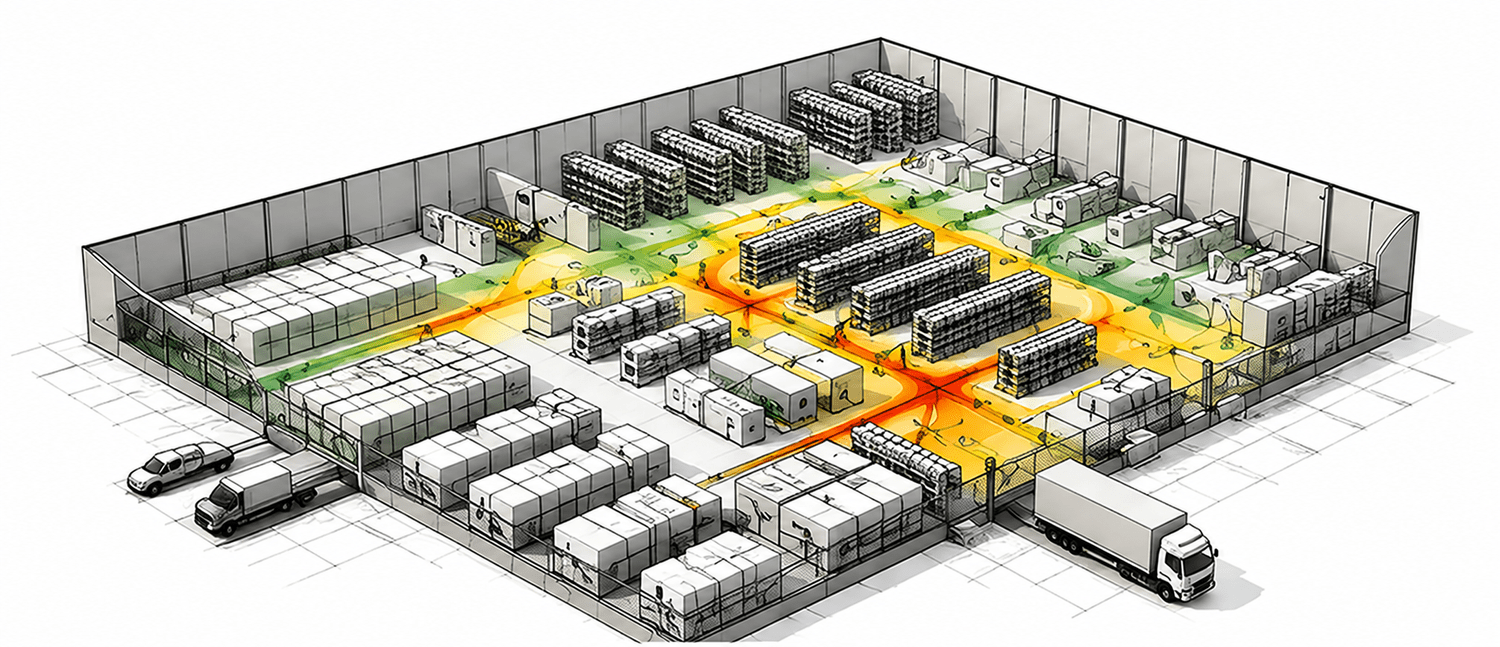
We can assess existing buildings or review proposed designs to understand how effectively their space, layout, spatial relationships and circulation support the people, goods and activities within them.
Relationships between key spaces, functions and activities.
How efficiently the arrangement of spaces supports movement.
Actual routes and movement patterns through the building.
How small inefficiencies multiply through frequent movement.
Potential bottlenecks and competing movement patterns.
Opportunities to make better use of available space.
It is to understand whether your building or design is making effective and efficient use of its space while supporting its function and users.
The way people, goods and equipment move through a building can influence layout, function, accessibility, operational efficiency, user experience, productivity and the commercial value of space to occupiers and owners.
Travel distance is therefore too important to ignore once the original design calculation has been completed.
Buildings change after occupation. Furniture moves. Departments relocate. Racking changes. Machinery is replaced. Occupancy increases or decreases and operational processes evolve.
A layout that worked well when originally designed may therefore perform very differently years later.
We can review your existing building and identify opportunities to improve space utilisation, circulation, operational efficiency, user experience and spatial relationships.
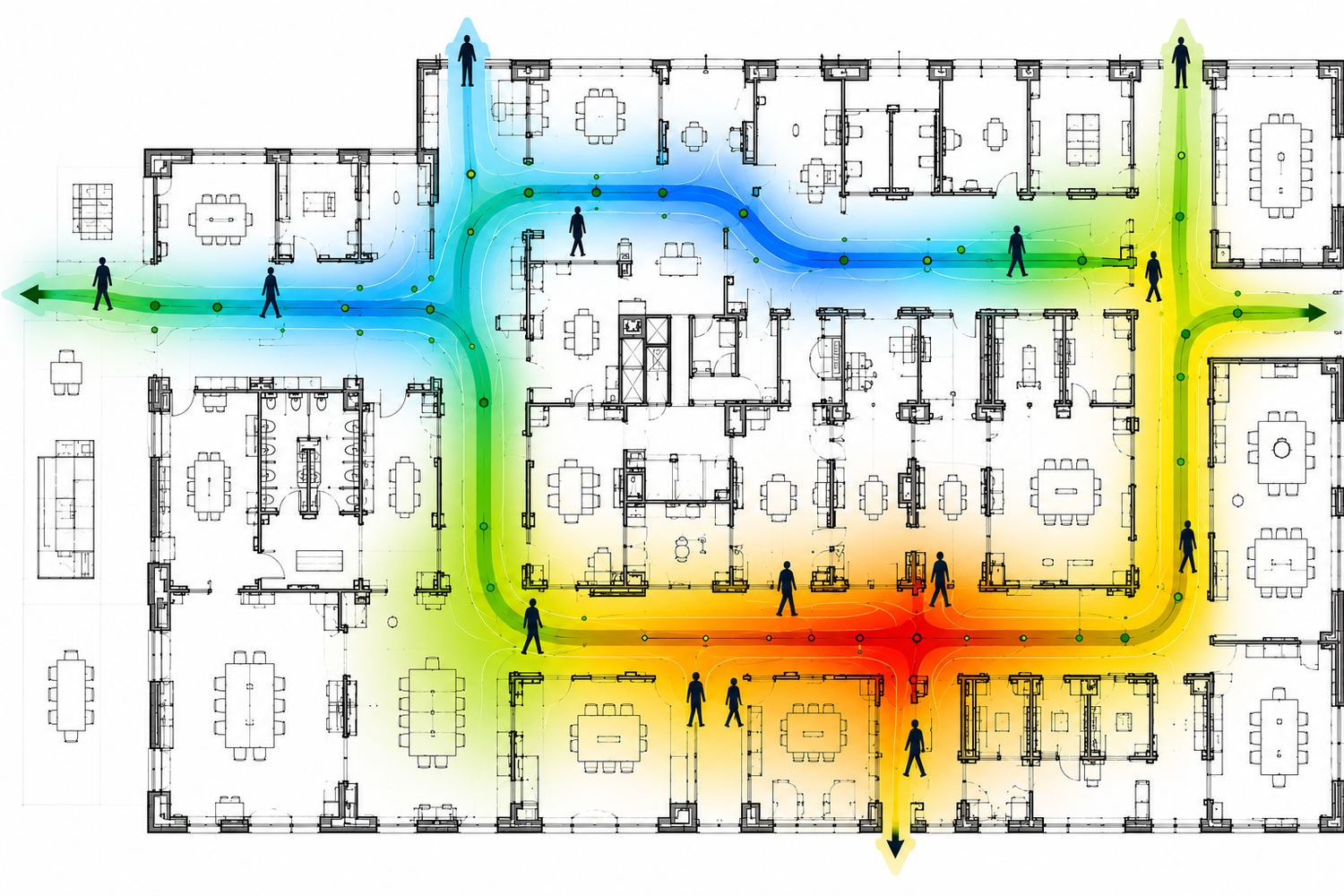
We can work alongside architects, developers and design teams as an independent architectural reviewer.
Before a design becomes fixed, we can examine how key spaces relate to one another and how people, goods or equipment are expected to move between them.
This provides another layer of design review focused specifically on movement and spatial efficiency.
Design → Review → Compare → Refine
The questions will differ according to the building, its function and the people, goods or equipment moving through it.
We are developing the concept of Travel Efficiency Rating (TER™) as a potential way of assessing movement as an aspect of building performance.
Rather than considering distance alone, TER could consider several interacting factors.
How efficiently the building is predicted to perform.
How efficiently the building actually performs once occupied.
Buildings are not static drawings.
People move around walls, doors, furniture, machinery, racking and other people. Occupancy changes. Layouts evolve. Equipment moves and routes become congested.
Dynamic Travel Reality (DTR™) explores how people, goods and equipment actually move through an occupied building — and how those movement patterns change over time.

Understand the building, its use, occupants and operational context.
Analyse layout, spatial relationships and movement patterns.
Evaluate performance using TER™ / DTR™ principles where appropriate.
Provide clear findings, observations and opportunities.
Use the findings to inform decisions and improve efficiency and value.
Our White Paper explores Travel Efficiency Rating, operational measurement, spatial performance, benchmarking, AI and the development of Dynamic Travel Reality.
It is provided for clients, architects, owners, occupiers, users and others interested in the concept for reference and discussion.